Posts

Mock Interview Reflection

     I believe that this assignment is an extremely beneficial and critical part of our curriculum, especially at this point in OT school. By preparing answers to common interview questions, I was given the opportunity to really reflect on the things I have learned about myself and the profession. It also allowed me to explore the areas that I have challenged myself and grown in during my time so far in OT school. I am able to process and reflect best when I write things down or journal, so I utilized this method primarily to prepare for the mock interview. Through my own personal reflection and through exploring resources that were posted for us to look at, I learned the importance of having goals and looking prospectively. Employers really do want to see that you are not desiring to remain stagnant as an OT practitioner. They commonly will ask about your professional goals for the next year or five years, or how you plan on continuing to be a life-long learner even aft...

Aging and Sexual Health

One of the key takeaways for me is the importance of educating clients-especially our older adult clients- on the differences between male and female sexual response. For example, most males often start with desire and then arousal follows. On the flip side, women tend to start the process with arousal and then desire follows. This should be discussed with older adult clients because the man may be waiting for the woman to desire sex before engaging when it may take initiating sex before the woman feels desire. Another takeaway for me is informing older adults that they can still express their sexuality, have sexual encounters, and get an orgasm in other ways besides just penetrative vaginal sex. This type of physical intimacy may become more and more challenging as a client ages in their older adult years, so educating them on other ways to get an orgasm and have physical intimacy is extremely important, especially because staying sexually active has many health benefits for the olde...

Driving + Community Mobility

We had a guest lecturer come speak on the topic of driving as it pertains mostly to the older adult population. He is a Certified Driver Rehab Specialist (CDRS). One of the takeaways I got from the lecture is how you must assess many different physical and cognitive components to determine if someone should proceed to an on-road assessment. For example, the CDRS will first assess visual components such as acuity, processing, and attention. Then they will assess cognition (MoCA, Mini Mental, SLUMS, etc.), range of motion, manual muscle testing (such as grip strength), along with many other performance skills. Something else I took away from the lecture is how we can offer some simple strategies (without necessarily being a CDRS) to individuals that are having some driving difficulties that are very cost-affordable. Some of these modifications include an enlarged rear view mirror, adding blind spot mirrors, and putting a dark colored towel on the dash to reduce glare. One interventio...

Nutrition + OT

The guest lecturer from today was very knowledgeable and enlightening. I did not have a strong background in nutrition nor did I realize the extreme importance of nutrition, especially in regards to the elderly and those that have been hospitalized. One takeaway from today's lecture was the importance of focusing on clients' quality of life over simply surviving. Especially in the acute care setting, if our goal is just to stabilize a patient and send them home, we have missed a huge part of our job! We should be focusing on making sure that the patients are able to get back to the things that are meaningful to them instead of having residual symptoms of being hospitalized including weakness and fatigue. Most if not all of these residual symptoms can be prevented with proper nutrition. One thing I did not know prior to this lecture was that patients leaving the hospital should be on an increased caloric intake and supplements at least 6 months following discharge including re...

Glyphs Reflection

The thing that surprised me the most after comparing the glyphs I made my first year and last week were how similar they were. I was surprised that my views on leadership had not changed very much after learning many things in OT school. Both pictures had a square head which means I believed and still believe that leadership can change and develop over time. This mostly stems from my leadership position with RKSTC, as I feel like I am not naturally a leader but have developed skills over time to make successful in my leadership role. One thing that changed was my eye shape. This shows that I originally believed that the majority of OTs are leaders but I now believe there are a fairly equal number of leaders and non-leaders. This belief stems from my fieldwork experiences. I believe you can either go the extra mile for patient care and be a leader or you can just do the minimum in your job and be a non-leader. The number of eyelashes on each of my glyphs were the same. I remembered 4/5...
Image
Above is a YouTube video of my debriefing of OT 640! Enjoy!

Neuro Note 4

Image
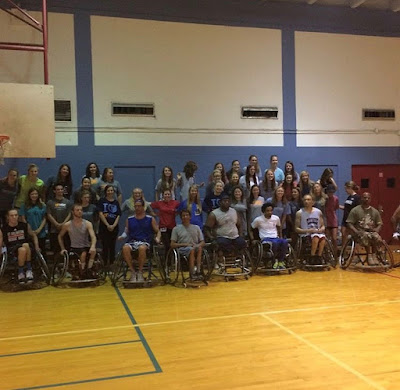
     For this neuro note, I am writing a reflection of my experience attending the Memphis Rolling Grizzlies' basketball practice. Our class was given the opportunity to sit in and watch their practice. While they are in their offseason, they scrimmaged for around two hours. After their practice was over, they brought out additional wheelchairs for us to get in and try out playing wheelchair basketball. I chose to write about this experience because I gained invaluable knowledge about adaptive sports and spinal cord injuries. One thing I took away from attending the practice was the value of social interaction with people who know what you are going through. I could tell that the team members were all very close and had really good relationships with each other, including the coach who was also in a wheelchair due to a spinal cord injury. It is important as a future practitioner to encourage our clients to remain socially active, especially with individual's who are in ...

Media Project

Image
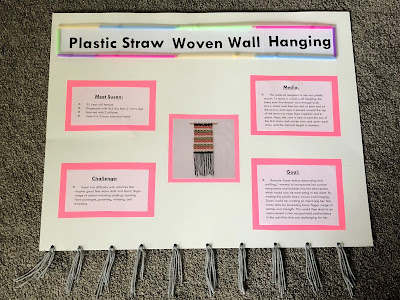
     The media project was such a fun, interactive way to learn about adapting, creating, and being innovative through an OT lens! One thing that I learned from this assignment is that as a (future) occupational therapist, you sometimes have to be creative and think outside the box for your clients. For example, my client had challenges with certain ADLs, shopping, and opening food packages. While I could not think of a way to directly use straws to adapt these activities, I took a different perspective by looking at the performance skills required to complete these activities which made me think of fine motor skills, range of motion, and strength. I knew my client enjoyed decorating, so I was able to creatively use straws to improve the skills required to complete the activities she was struggling with while also being client-centered and occupation-based. After completing this project, I realized that OTs can be very resourceful by using everyday objects as adaptive e...

Neuro Note 3

Image
      In April, a group of us from the UTHSC Occupational Therapy program attended Joy Prom. This is a prom for individuals with special needs to attend and have loads of fun! They partner volunteers with guests so each individual that attends has a friend and can provide assistance if needed. I was partnered with an amazing lady who has cerebral palsy which is considered a neurological diagnosis. I am choosing this event as my topic for this neuro note because I learned so much from her that night about many different things.       She uses a power wheelchair as her means of mobility. I could tell she had very good range of motion and control in her arms and wrists which allowed her to control her wheelchair with ease (at least that's how it appeared to me!). When we sat down to eat dinner, I was unsure how independently she would be able to feed herself. She asked me if I could get out her special cup from her bag. We poured her drink into this cup ...

Conceptual Model

Conceptual Model Link

Inside the O'Briens

Image
     The book, Inside the O'Briens, is a captivating, informative, and insightful read! I would absolutely recommend this book, especially to individuals working in health care. It shines a light on Huntington's disease that you don't necessarily get from a textbook. I especially was interested in the decision making process for receiving genetic testing. Often times we assume everyone who is at risk for developing HD would want to be tested. However, this book reveals the struggle and emotional turmoil from finding out your test results as well as deciding not to know. It is important to remember that a positive or negative gene result not only impacts that individual who was tested, but everyone else involved in that person's life. I thought the book also did a great job of portraying the depression and sense of hopelessness that accompanies HD. As a (future) health care professional, I feel like it can be easy to focus on the physical manifestation of symptoms includ...

Neuro Note 2

Image
The short video I decided to watch for this neuro note came from: https://alsnewstoday.com/2018/02/01/alex-coriells-journey-with-als/?utm_source=ALS+News&utm_campaign=856209f0b7-RSS_FRIDAY_EMAIL_CAMPAIGN&utm_medium=email&utm_term=0_0593028b75-856209f0b7-71721017 I knew we would eventually be talking about ALS, so I decided to get somewhat of a head start on this diagnosis. Also ALS has gotten some recent attention over the past 5 years due to the ALS Ice Bucket Challenge, so I decided to learn more about this diagnosis. This video was about Alex Coriell who was diagnosed with ALS at the age of 29. His wife documented his journey with ALS and how she was able to care for him throughout his journey. I was absolutely astonished at how quickly his diagnosis progressed. I think one big take away for almost all diagnoses is that they can and will present in variations with different timeframes of progression. This video was also very inspirational. Many times throughout the...

Life Balance Model

     I chose to look into the Life Balance Model developed by Kathleen Matuska. This would fall under an occupational therapy model of practice (MoP). The idea behind this model is that life balance can be achieved when an individual participates in activities that are meeting their basic physical needs, that are rewarding and include self-affirming relationships with other people, are engaging, challenging, and make the individual feel competent, and establish meaning and identity to that individual. This is all included in the individual's context and environment. This model is applicable for all populations (all ages and all disabilities, or no disability). "Functional" according to this theory would be that an individual does participate in activities in their daily life that allow them to have life balance (according to the aspects of life balance listed above). An occupational therapist could measure stress or life satisfaction (using a questionnaire) because the th...

Neuro Note 1

     I decided to watch a TED talk titled, "Can the damaged brain repair itself?", presented by neurologist Siddharthan Chandran. This video was approximately 16 minutes long. I decided to select this TED talk because I remembered being informed in our Neurological Aspects class that nerves in the brain and spinal cord cannot regenerate themselves, therefore the damage done in these areas is permanent. Also, there is no real known "cure" for individuals who are suffering from a neurodegenerative disease such as ALS (motor neuron disease) and multiple sclerosis. The speaker displayed an image of a brain with multiple sclerosis. There were "holes" in the scan that represented the degeneration of motor neurons in the brain. However, over time, there were some "holes" that had started to fill back in fully or at least partially. The speaker stated that the problem is not the inability of the brain to repair itself from the damage, but that the brain ...

Knowledge Check Session 22

     One big concept that I really learned from this session is the importance of health literacy. This relates to individuals understanding and managing their health care. As a future OT, it is a priority to explain everything in very lay terms. Additionally, it is important to encourage the clients to ask questions to check for understanding.      I also learned about the social determinants of health which include education, peace, shelter, food, income, social justice, stable ecosystem, and sustainable resources. Before this session, I never really thought about these issues and the way they can impact an individual's overall health. These issues are important to look in to as health professionals as they direct the way that we care for our clients and even prevent certain health problems from occurring in the first place.

Knowledge Check #17

     One rotation of my observations in undergrad was with an occupational therapist who worked primarily in acute care at the local hospital in the city that I was in school. One of the first things that I noticed while shadowing in acute care is that the hospital is all about efficiency. They try to send patients home or to another facility as quickly as possible. Essentially, if the person is stable (even right after surgery), they are already discussing with the client and their family about the next steps for rehabilitation outside of the acute floor. It also really surprised me that we would go visit a client for therapy even the same day after they had undergone surgery just to get them moving a little bit. The clients that we visited came from all kinds of backgrounds and had numerous types of surgeries or diagnoses which made acute care very interesting and fresh. The sphere of practice was mostly biological, although I do feel like there were some patients that ...

Learning Adventure

     One activity that I chose that really made me think was the TED Talk by Michael Nesmith in regards to the concept of universal design. His main point was encouraging everyone to use and push forward this concept of "universal design" which he defined as "the design of products and environments to be useable by all people, to the greatest extent possible, without the need for adaptation or specialized design". This concept is so relevant to me as a future occupational therapist where our mindset is not on the disability but on people as a whole. Occupational therapists seek to eliminate barriers to allow people to live the life they desire including participating in any activity they may enjoy.          Additionally I listened to the "Au-Some Swimmers" podcast which was very interesting! I have never really thought about the large need of the role of OTs in helping children on the autism spectrum learn how to swim. I liked how they addressed ...

What is the OTPF and what is its purpose?

The OTPF is the framework for the profession of occupational therapy. It first describes what occupations are. These include activities of daily living (ADLs), instrumental activities of daily living (iADLs), play and leisure, work, education, rest and sleep, and social interaction. Additionally it is broken down into subsections. The first includes client factors which are things that are really important to the client including spirituality, beliefs, body functions, and body structures. Next is the performance skills which include social participation, motor and cognitive skills. After that is the performance patterns which are the habits, rituals, roles, and routines that we participate in on a daily basis. The final subcategory is the context and environment. This essentially means where our occupations take place and the context that they occur (which includes cultural, personal, physical, social, temporal and virtual aspects surrounding our occupations). By examining all of the ...

Era Presentations

     Based on the information presented in the era presentations, I found a common theme among all of the decades- that the field of occupational therapy has and will continue to evolve. Over the last few decades, occupational therapy has not only grown as a profession, but it has accommodated the ever changing needs of society. Especially post-war and after the deinstitutionalization movement began, there became a growing need to accommodate individuals living with both physical and psychological disabilities. Looking into the future, I can foresee the field of occupational therapy continuing to adapt to changes in society as it has done since the beginning. Our society has more access to adaptive technology than ever before. Additionally, the baby boomers are starting to age and retire while the younger generation is suffering more from psychological issues. This will also shape what occupational therapy will look like in the future.

Board Certifications Interest

Out of the board certifications available through AOTA (gerontology, mental health, pediatrics, and physical rehabilitation), I think at the moment I am most interested in the pediatric certification. I have always had a passion for working with children. After observing many hours in a hospital  pediatric outpatient clinic, I fell in love with the services that were provided and the interventions used with the kids. While it is undoubtedly hard work practicing in pediatrics, I believe there is so much reward that goes along with seeing the positive effects of early intervention. I have also become increasingly interested in the potential benefits of incorporating animal-assisted therapy into treatment session, so I would also consider obtaining the Certified Hippotherapy Clinical Specialist certification. This requires at least 3 years of experience practicing occupational therapy and experience riding horses. It also requires at least 100 hours of direct treatment in hippothera...